Top Zaklad
Venue discovery platform. Users find restaurants, cafes, and bars through reviews, filters, and AI-powered search. I was involved from early research and ideation through to the final design of the web platform and iOS app.
Context
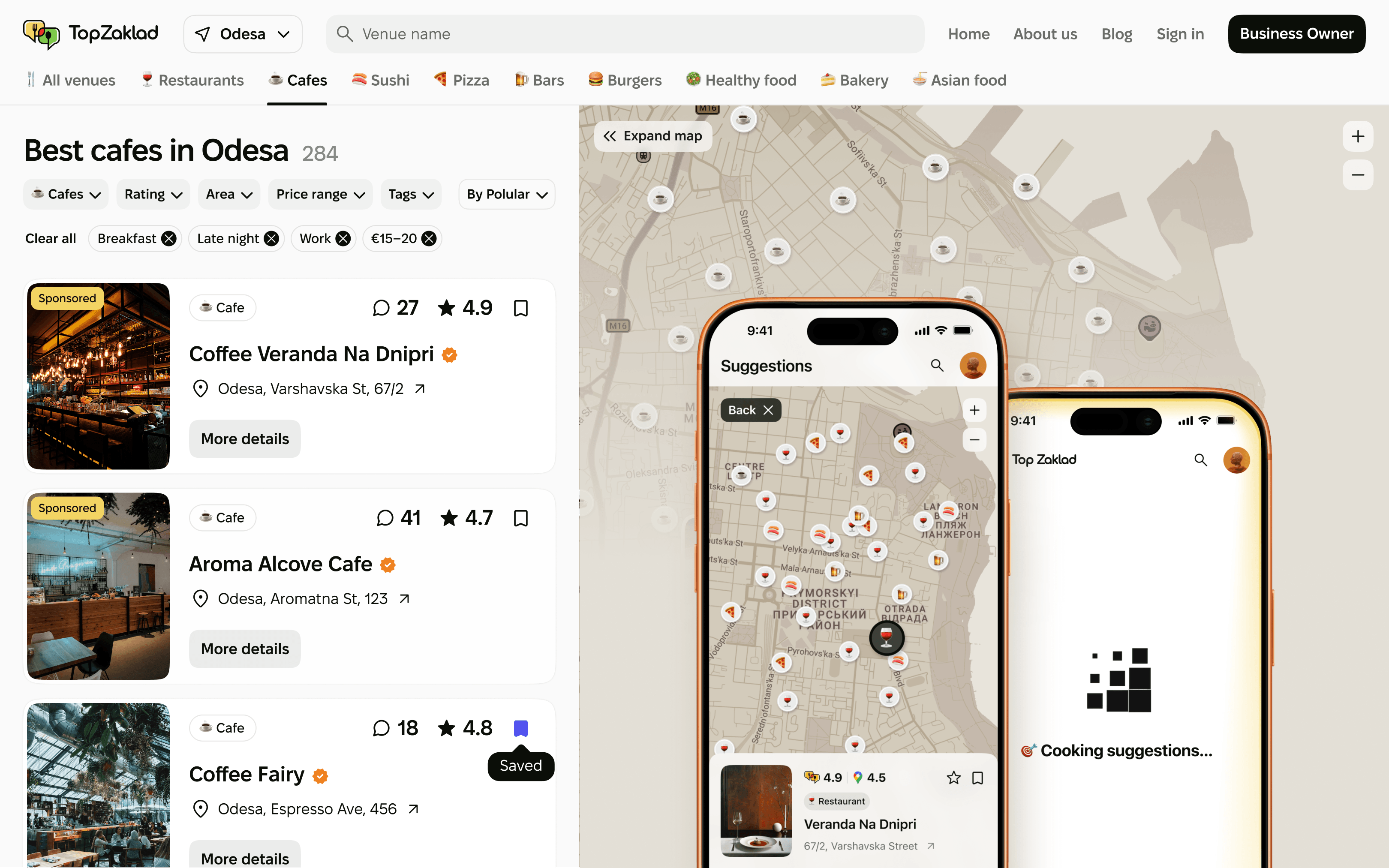
TopZaklad connects people looking for a place to go with venues that want to be found. Users discover restaurants, cafes, and bars that match their mood and occasion. Business owners get tools to manage their presence and attract clients.
The product was built in 2 phases: first, a web catalog solving a visibility problem in small Ukrainian cities. Then a full pivot to an AI-powered iOS app targeting major cities. I designed both from scratch.
Business model: monthly B2B SaaS subscription for venue owners, covering profile management, analytics, and extended features. Promoted placement in search and catalog as additional paid options. Free for users.
Phase 1: A web catalog for small cities
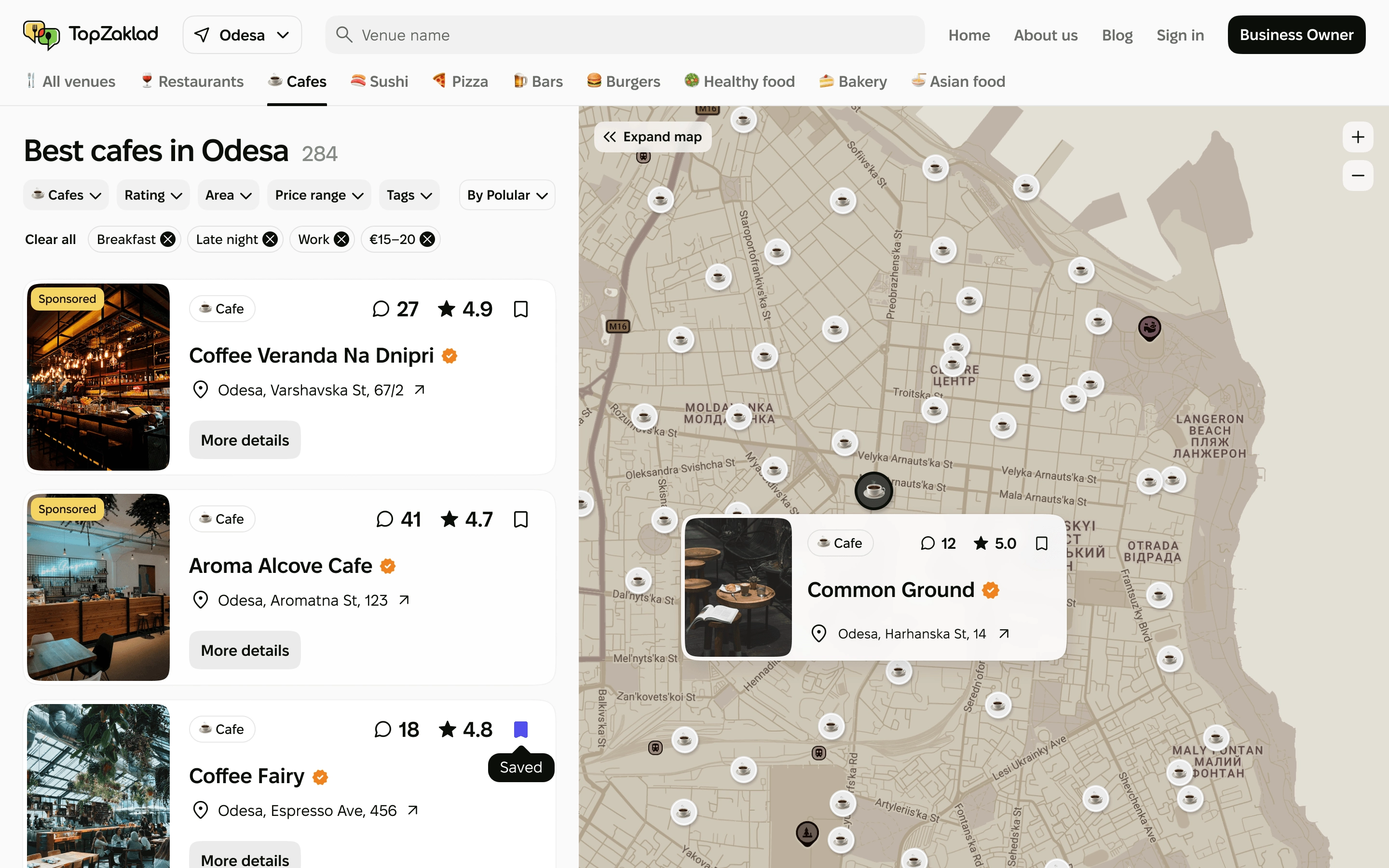
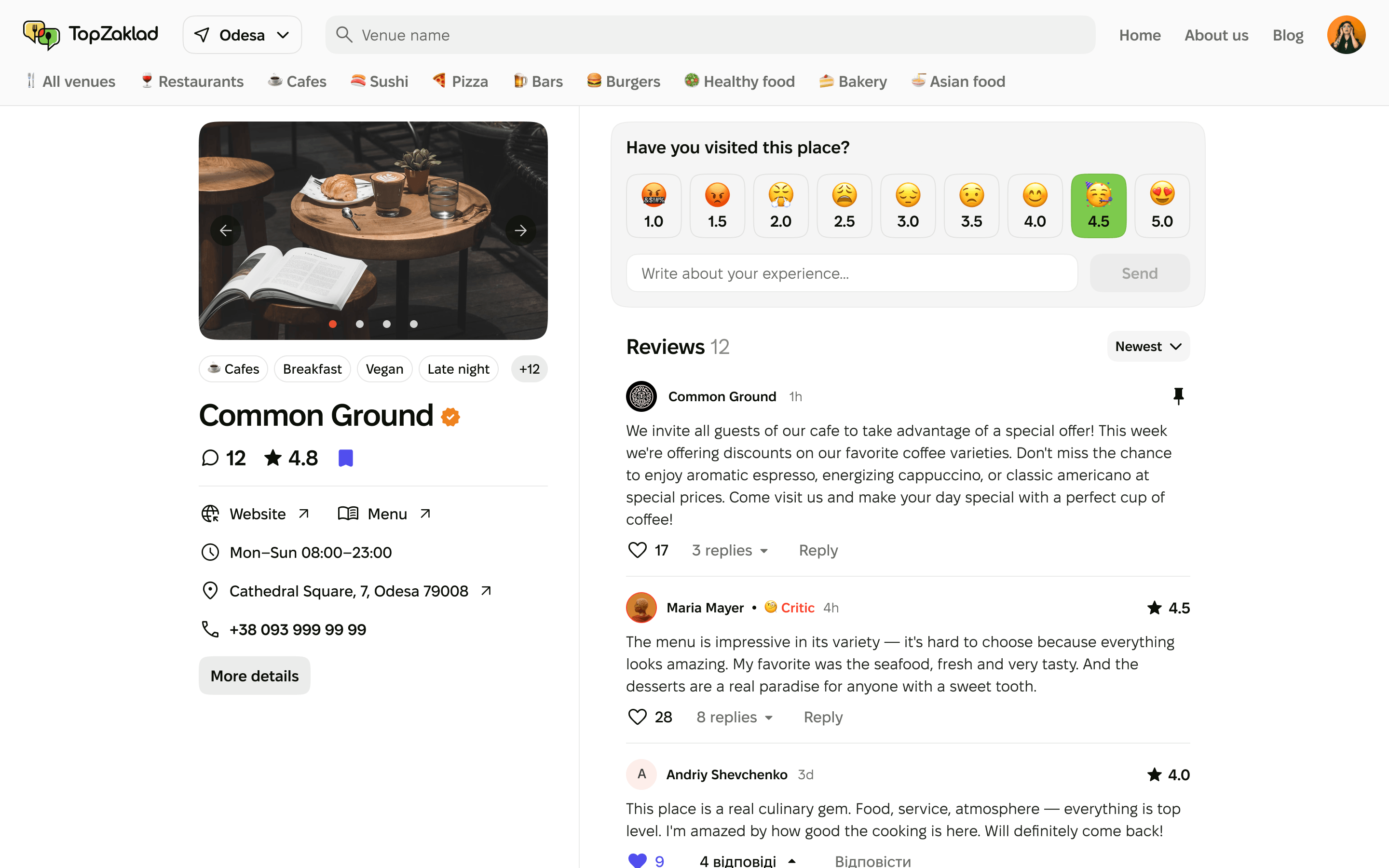
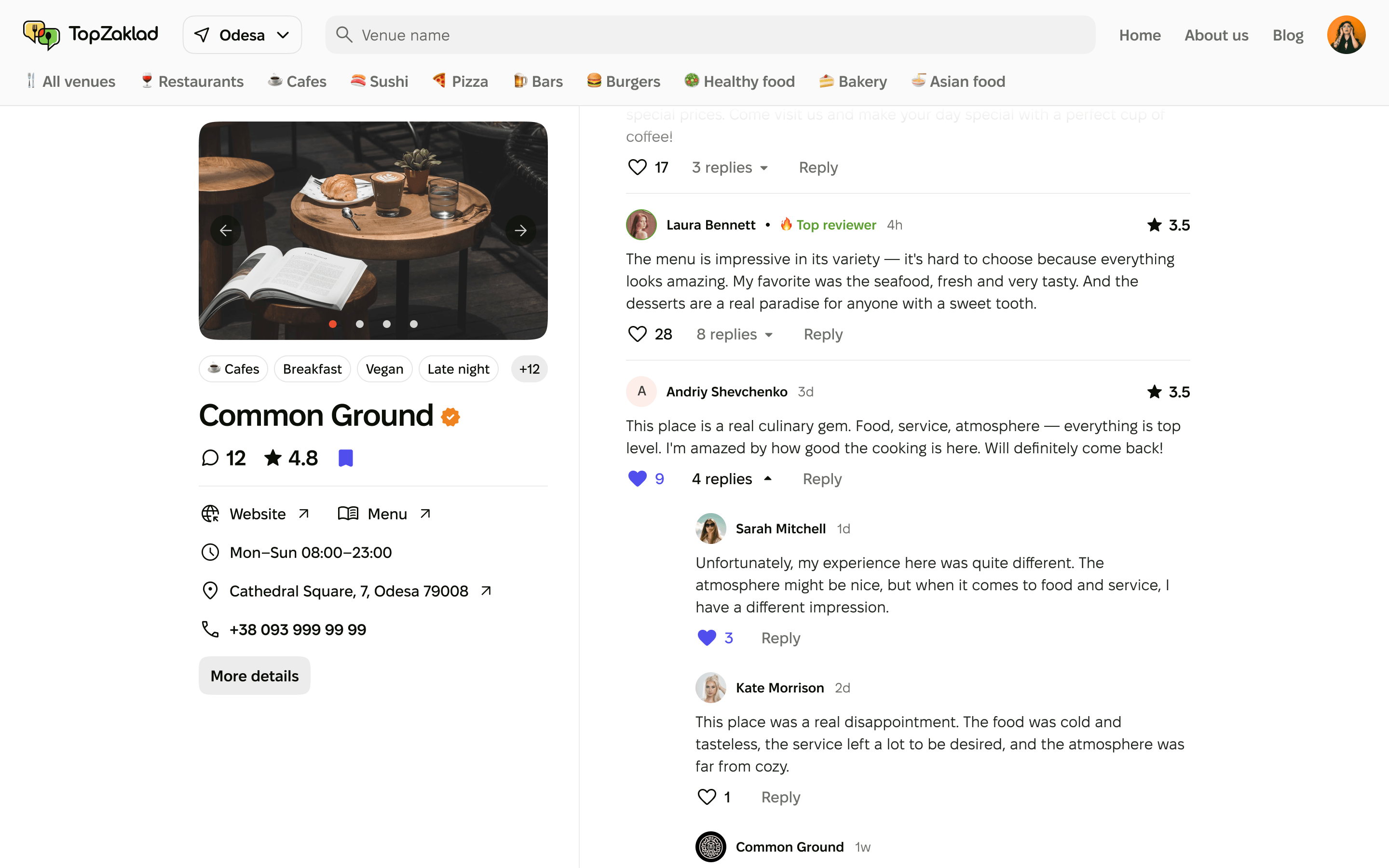
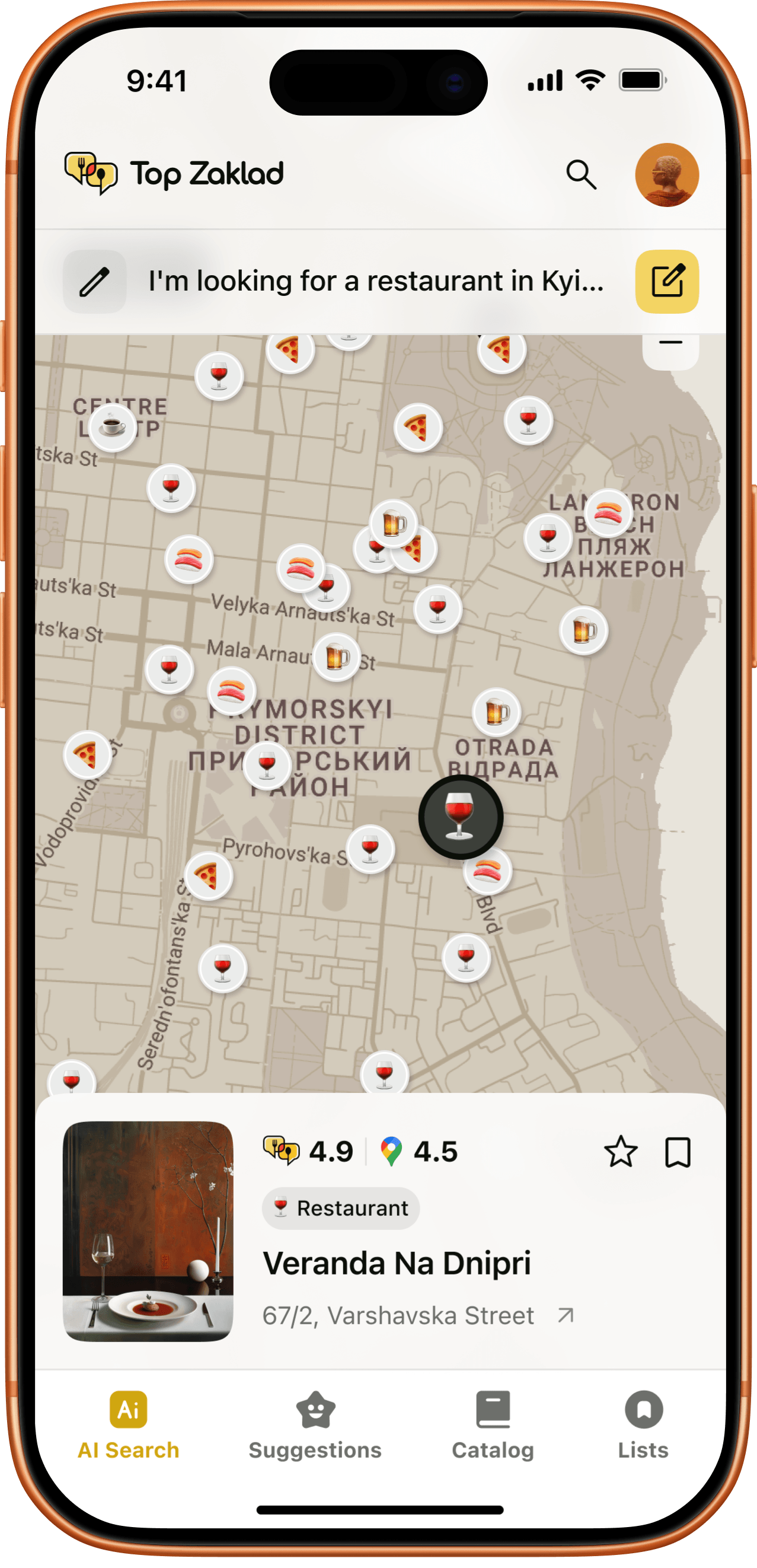
We built a catalog with map integration and basic tools for owners to manage their profile and run promotions.
A survey before building anything gave us three key insights:
- Google Maps data for small Ukrainian cities is either empty or years out of date. The only way to fix that was to build the database manually. So we did!
- Users don't need a complex discovery experience. They want to find what's available nearby, fast.
- For business owners, the most important thing is an affordable way to promote themselves.
Phase 2: The product was reimagined
Six months after the web launch, AI had grown enough that a mobile app built around it no longer needed a large team and budget. Focus shifted from small cities to major ones, and from web to a mobile app powered by AI search.
In big cities, choosing a place to meet is a real headache. 50% of people keep going back to the same places because they're afraid of being disappointed. The search takes 15-30 minutes, and the result still often falls short.
Filters assume you know exactly what you want: "restaurant, Italian cuisine, under $20." AI works even when you don't: "I'm 25, I want to have a great night out with friends, surprise me!" For the business, mobile also opened more room for monetization and scale.
1 - Onboarding
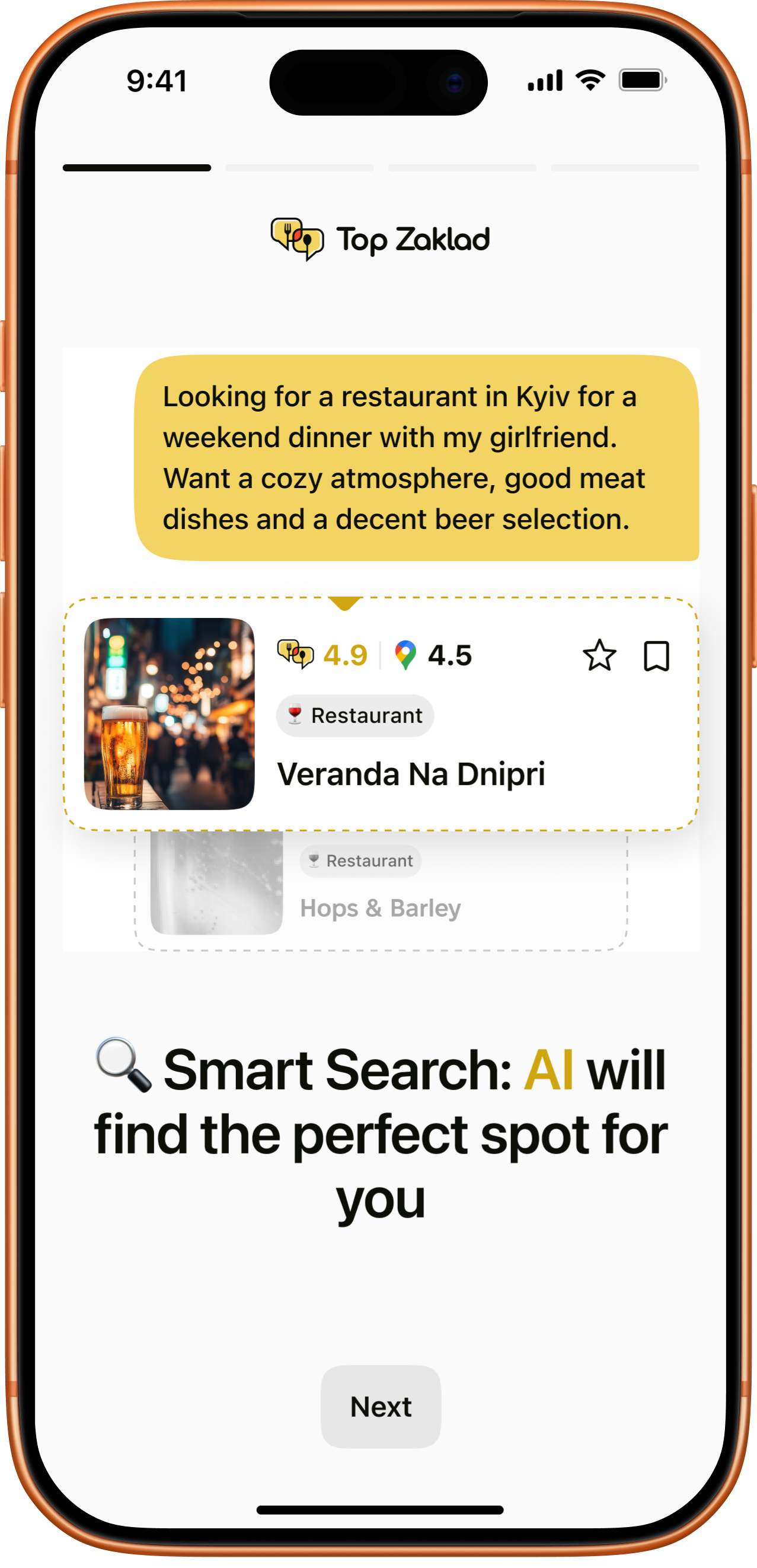
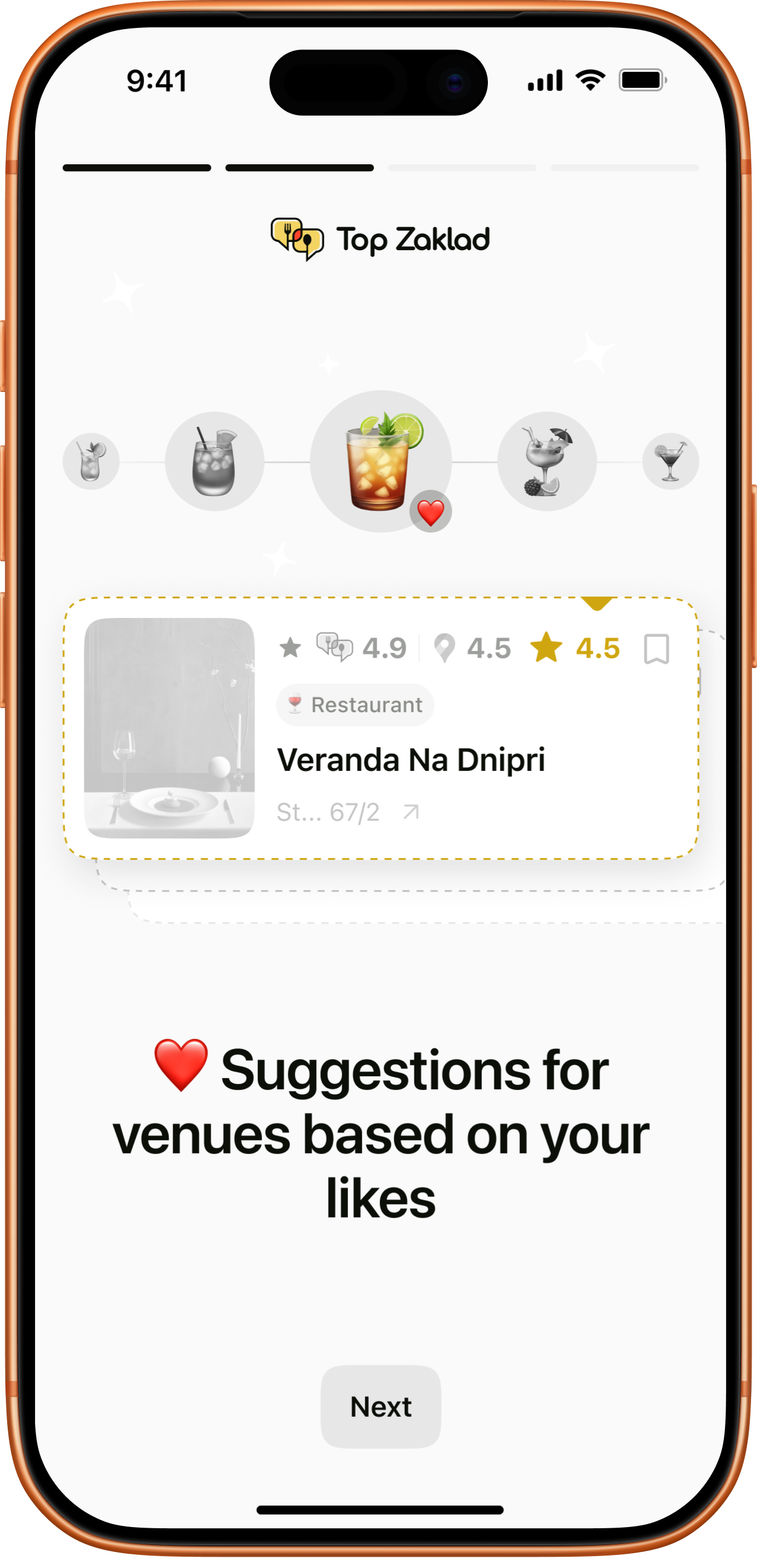
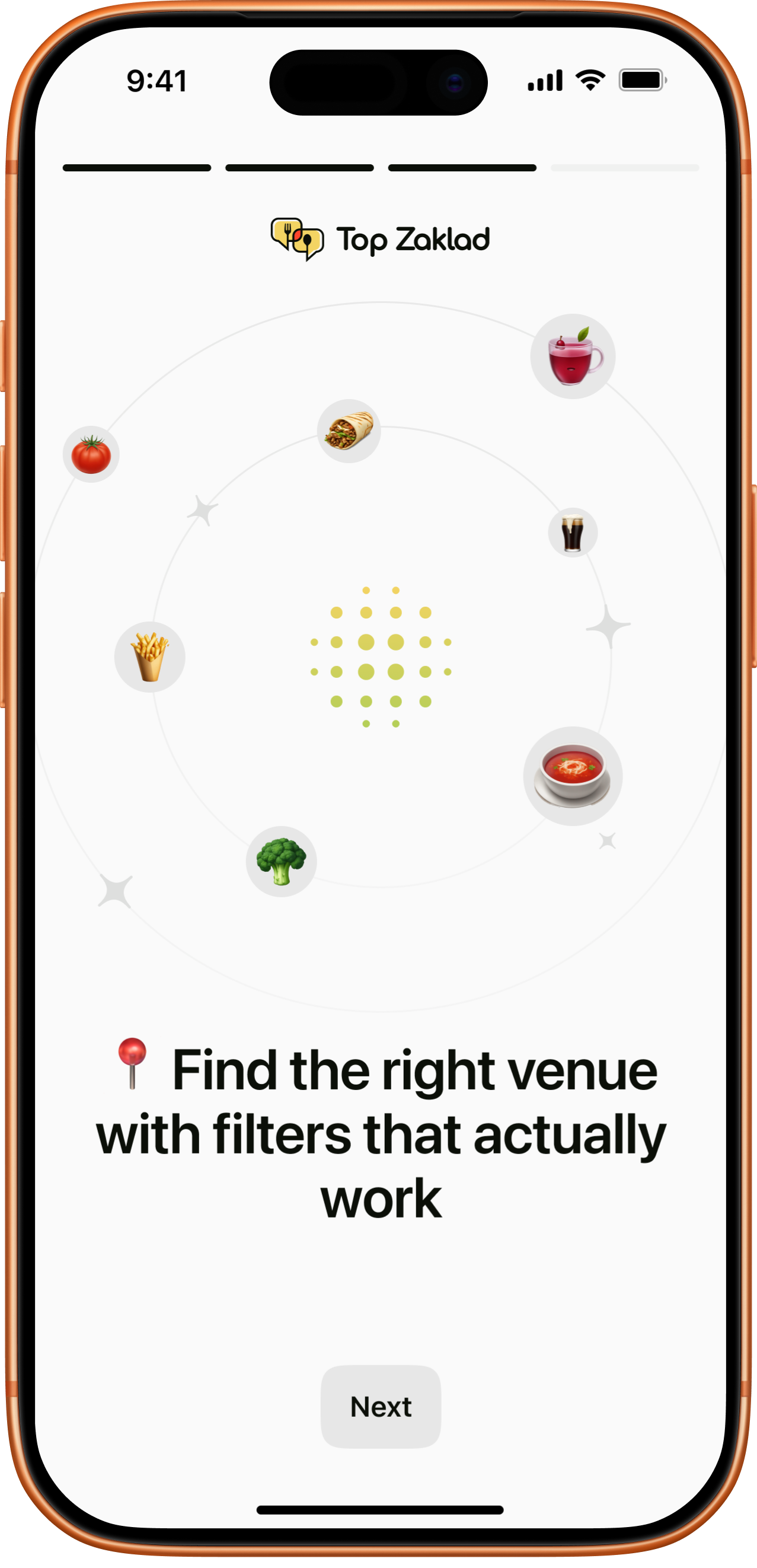
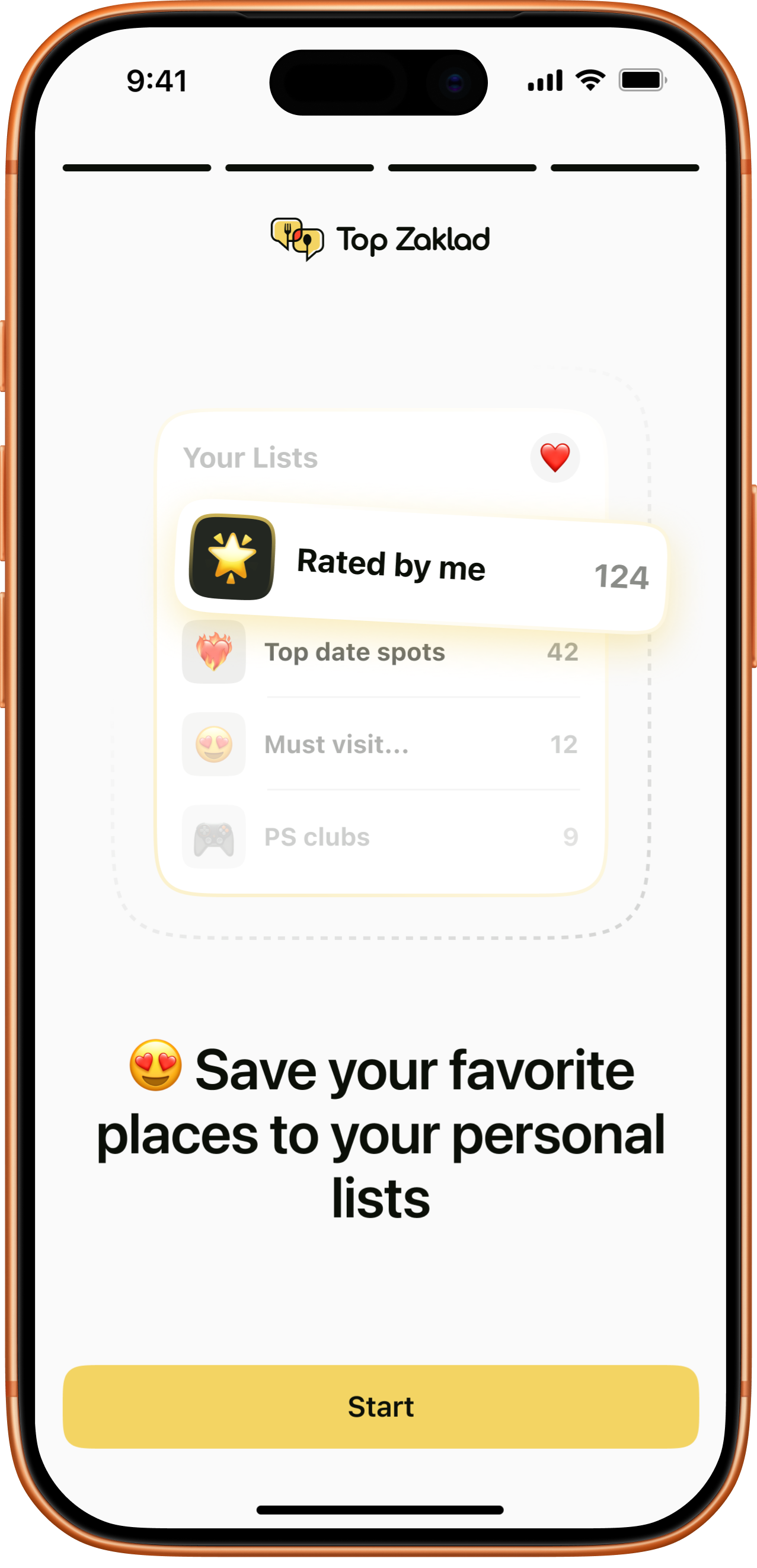
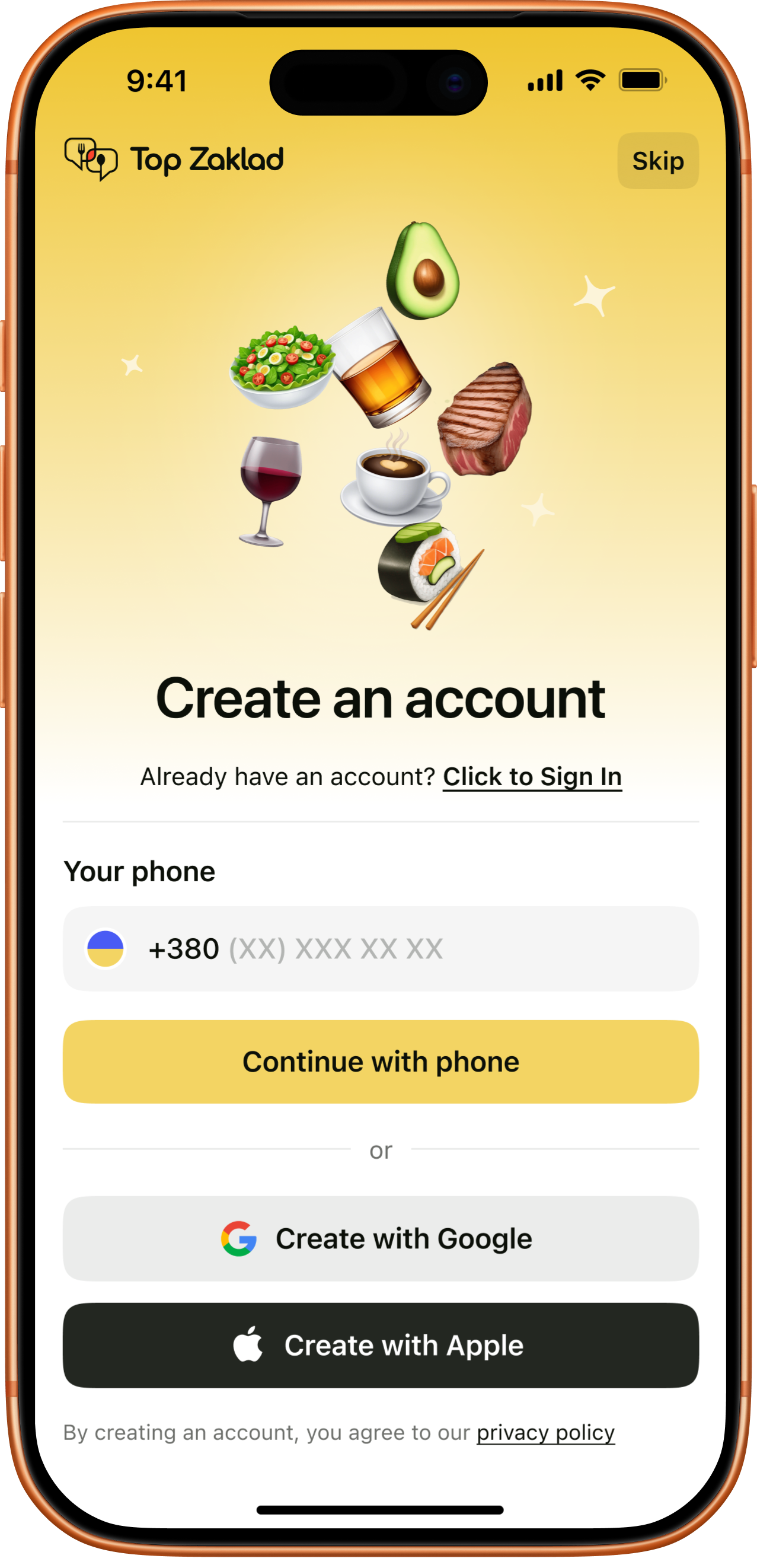
AI venue search is a new pattern, so people need to see it before they sign up. The onboarding shows the product first: AI Search, Suggestions, Catalog, and Lists, with an optional Sign Up at the end.
We intentionally skipped a personalization step. At MVP stage, less friction mattered more than preference data we had nothing to validate against.
2 - AI Search
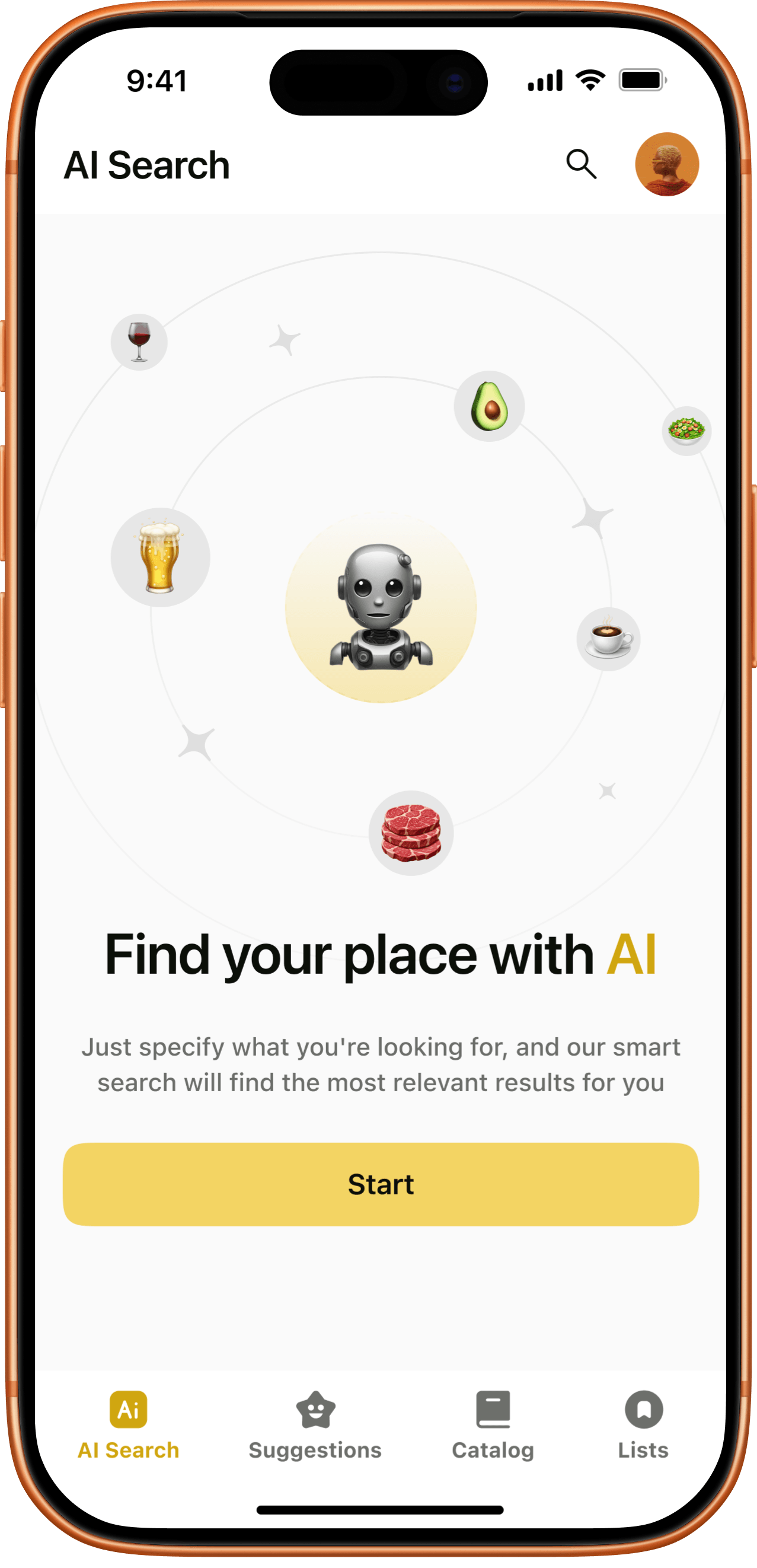
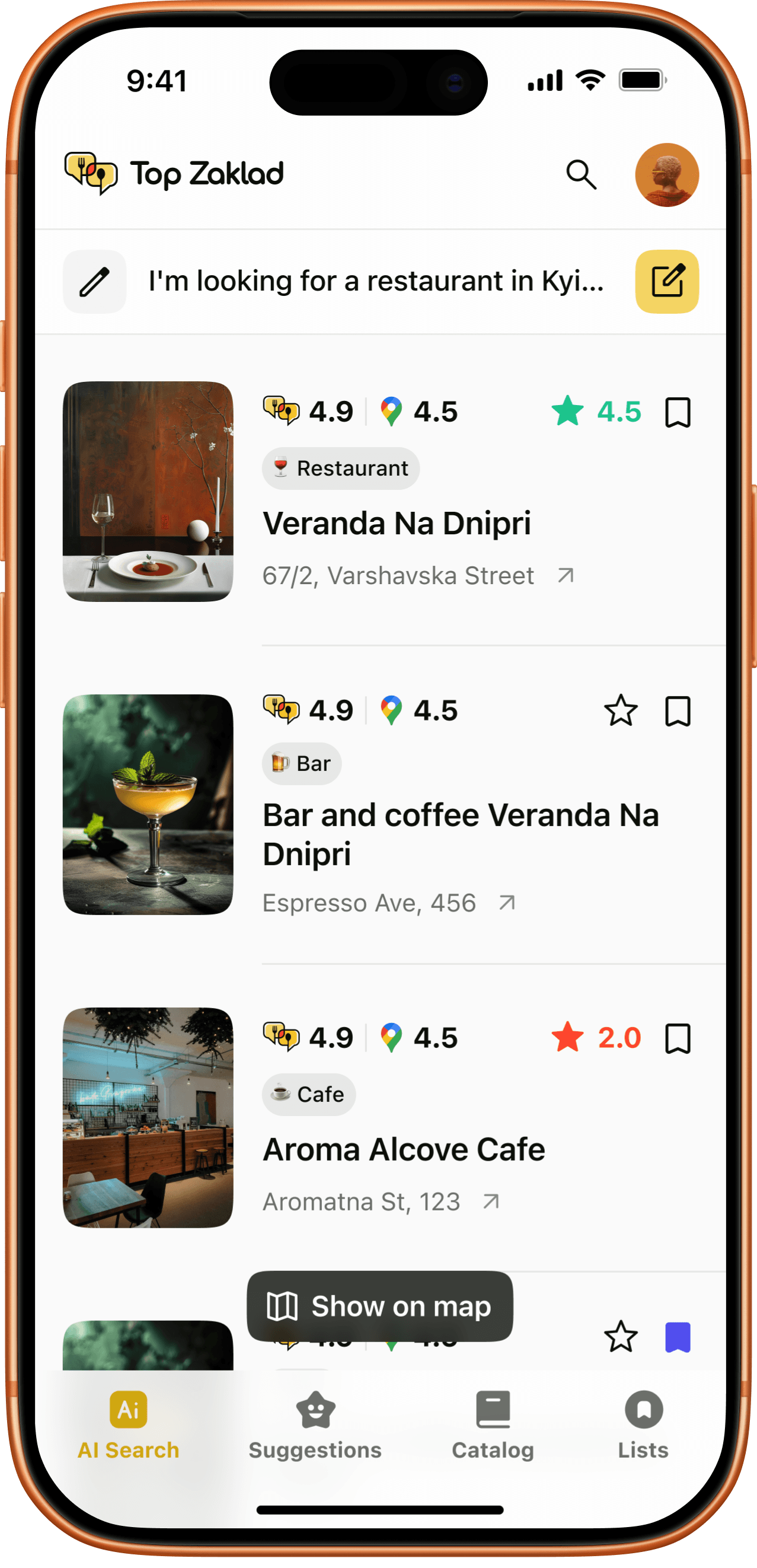
Filters only work when you already know what you want. If you just want a good night out and have no idea where to start, they give you nothing useful.
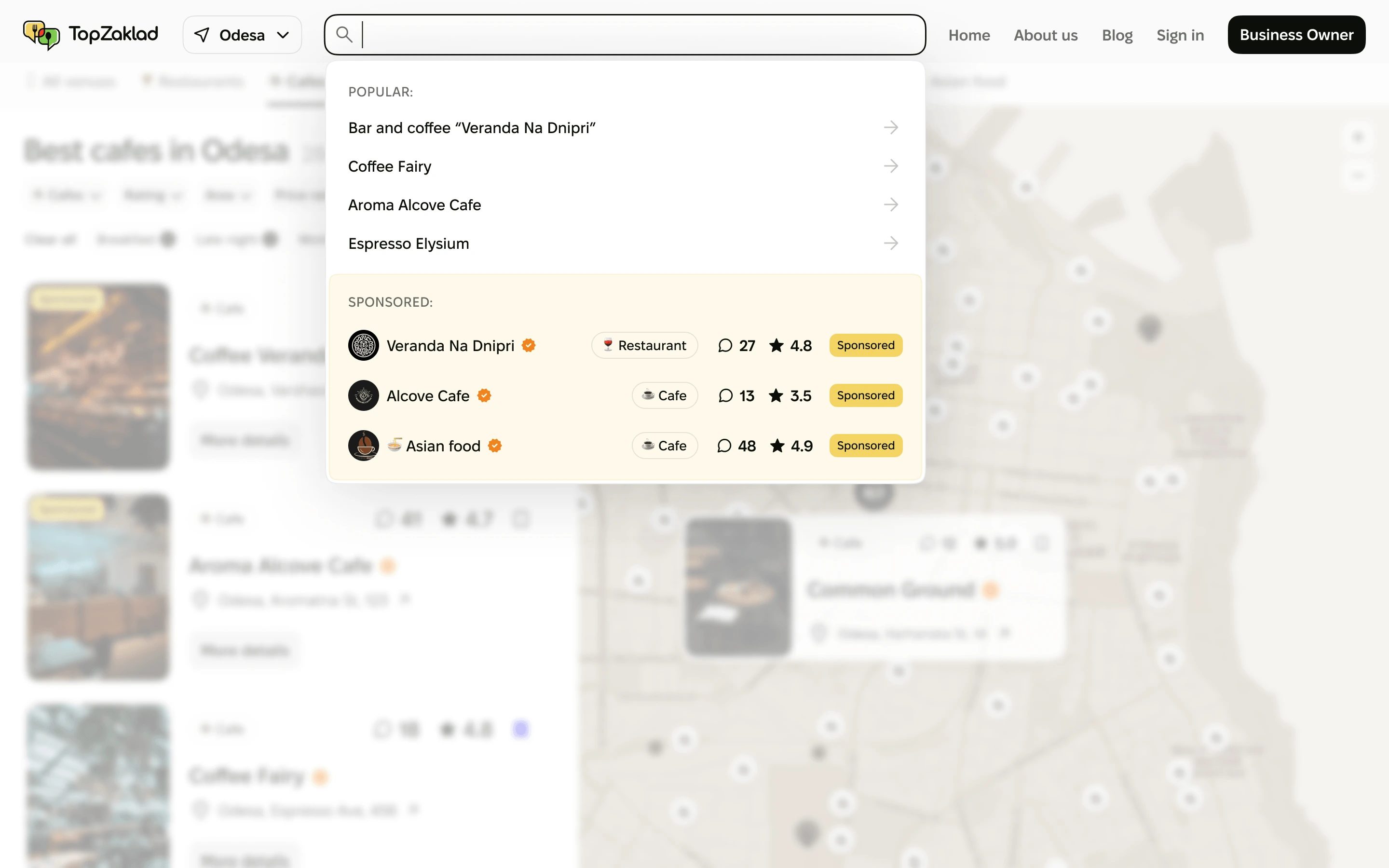
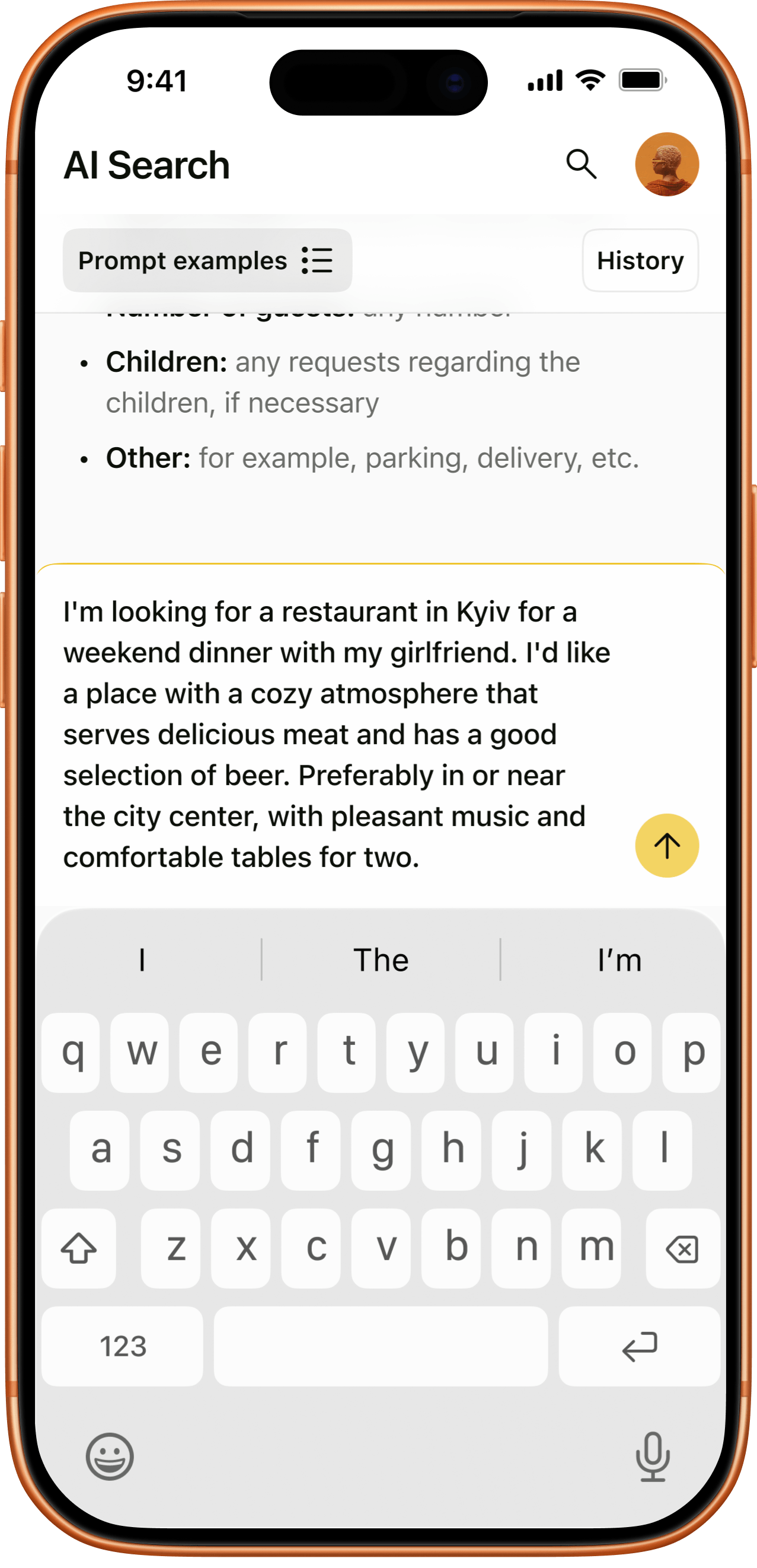
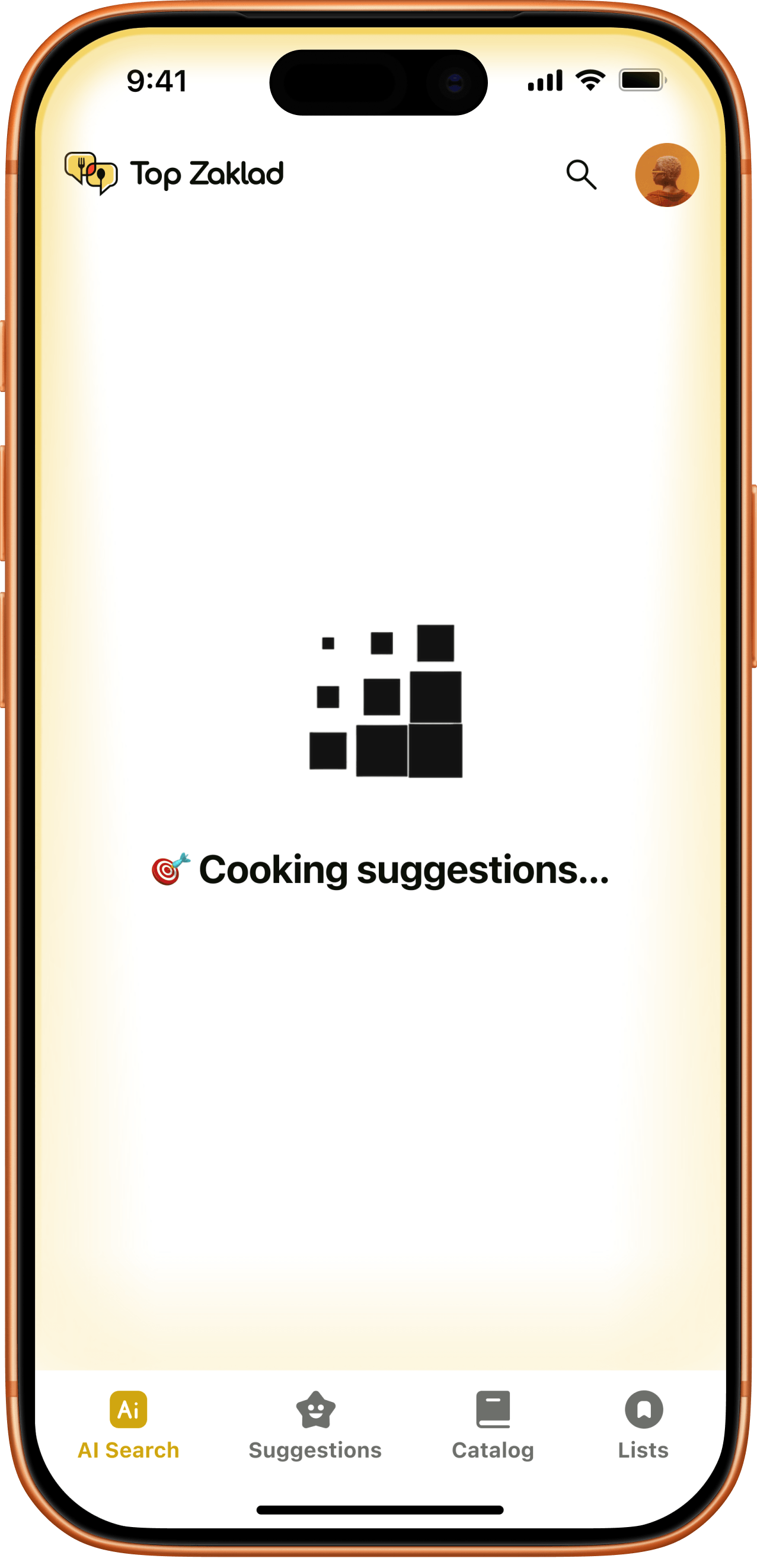
So we built a chat-based search with example prompts to help people get started. AI reads venue descriptions, tags, and user comments, context that filters can't see, and returns a ranked list matched to what the person actually asked for.
3 - AI Suggestions
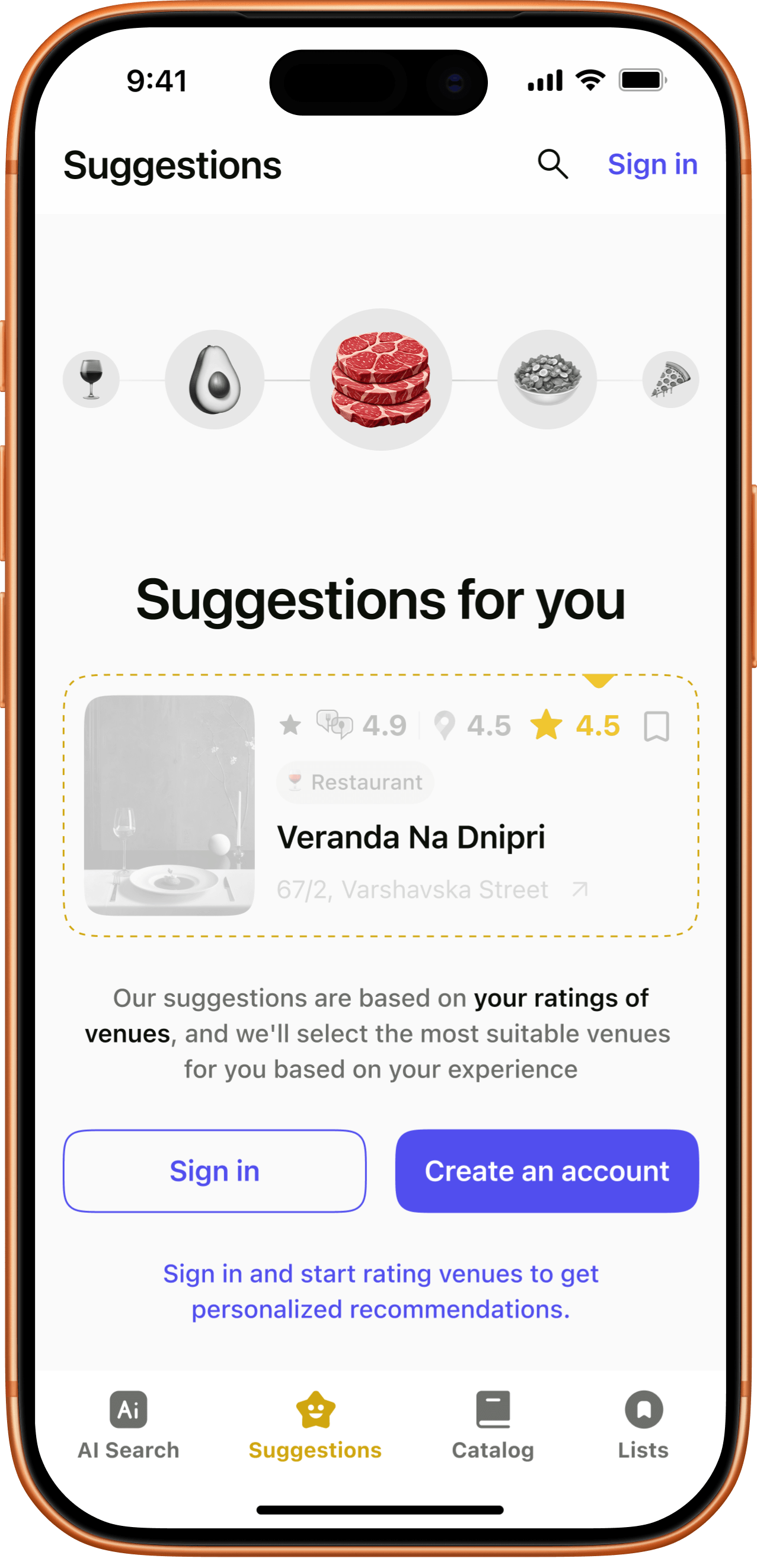
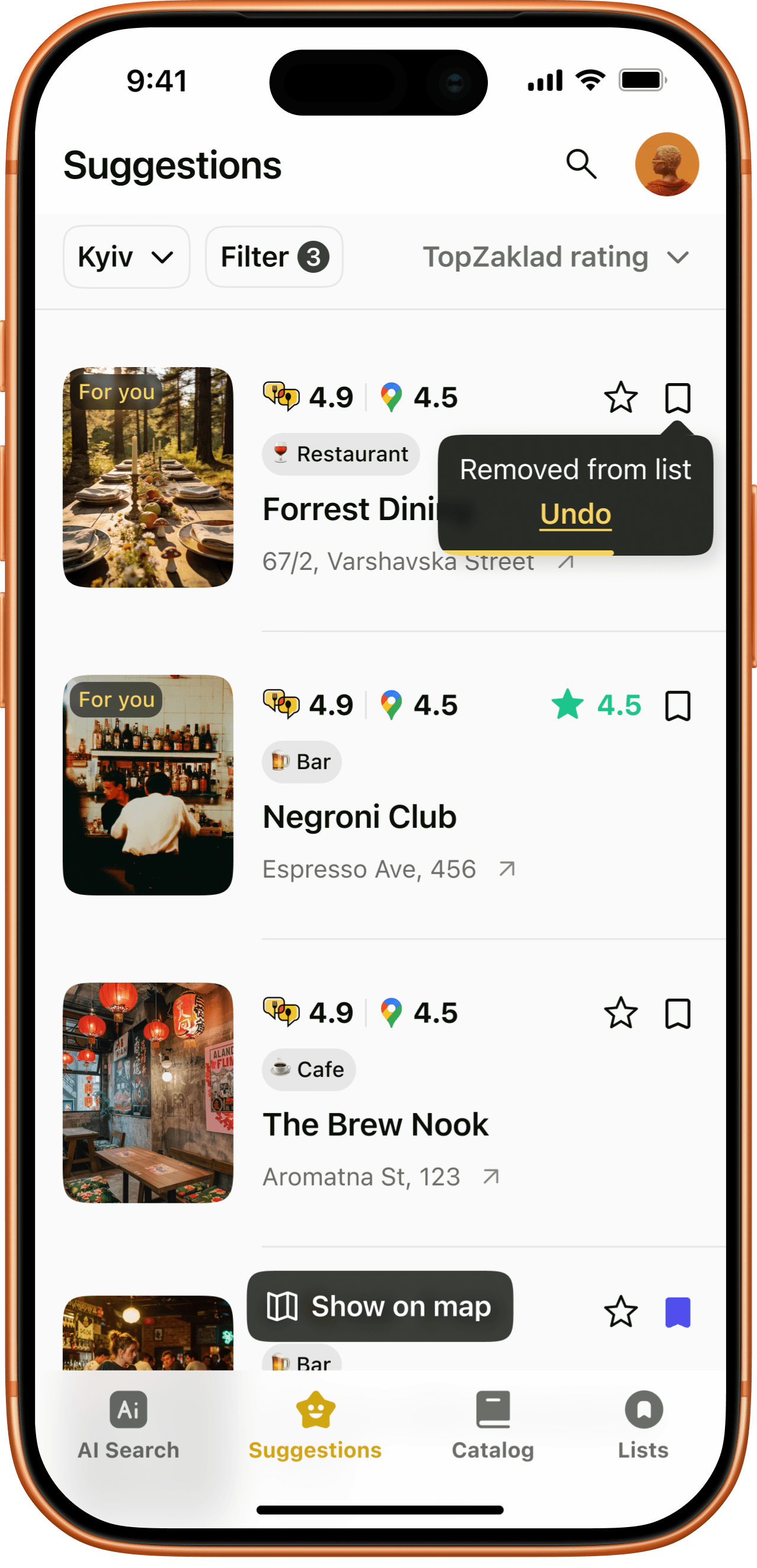
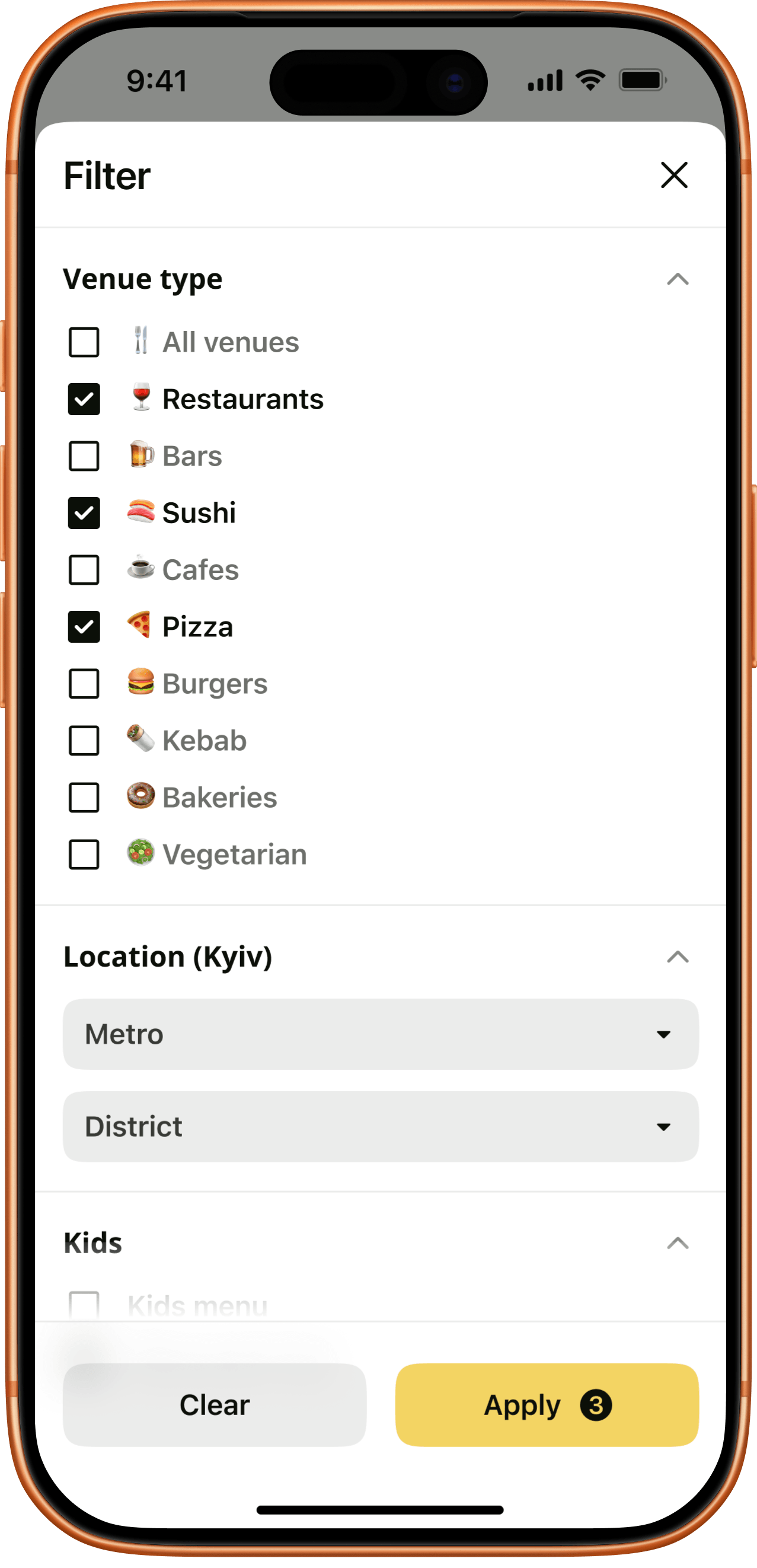
Not everyone is ready to type a message to an AI. Some people prefer filters, some just want to browse.
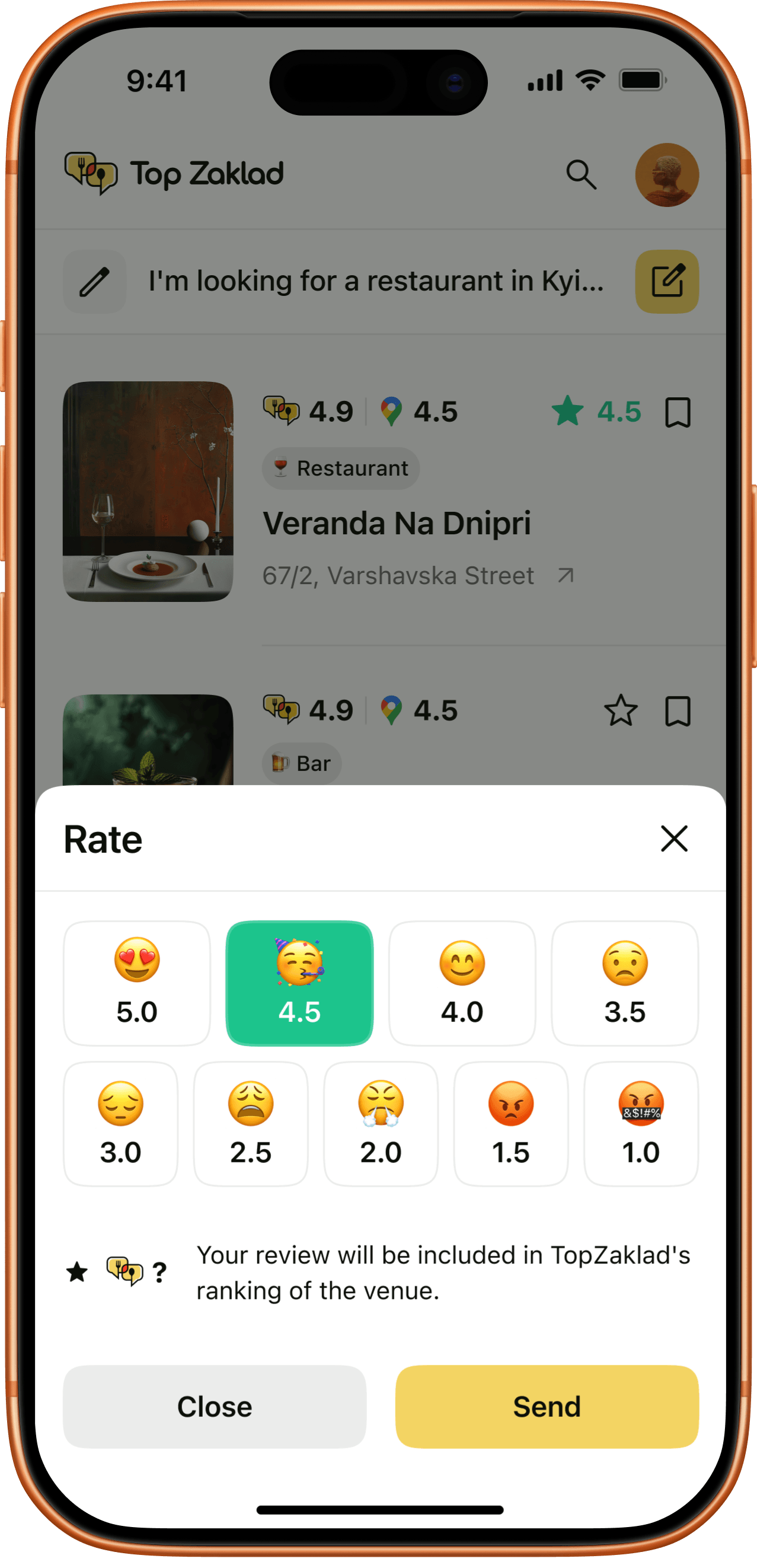
Suggestions are AI-powered too, but passive: the app watches what the user likes, saves, and searches for, and builds a personalized venue list. With AI Search and the catalog, that gives the app three ways in.
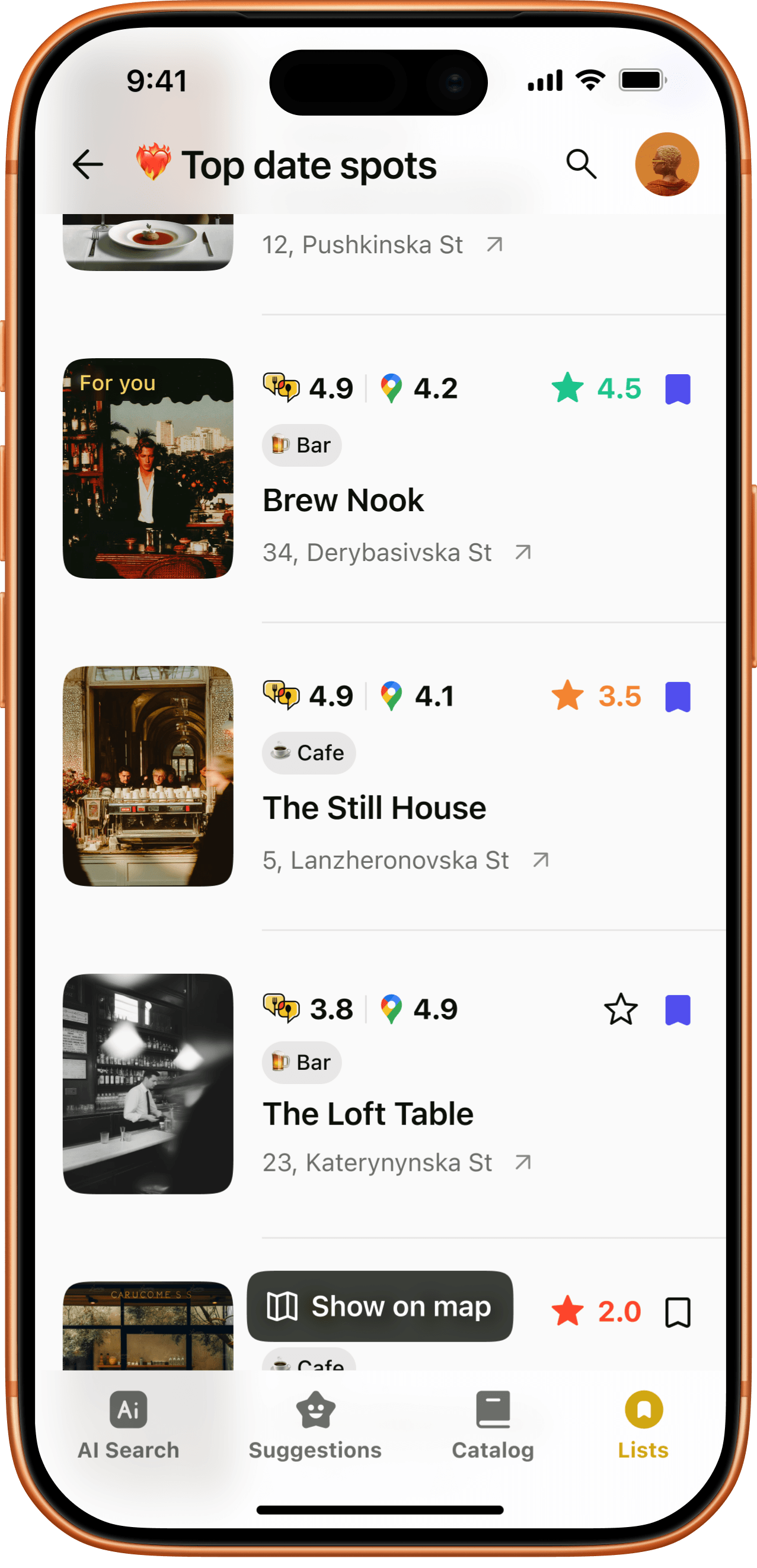
4 - Lists
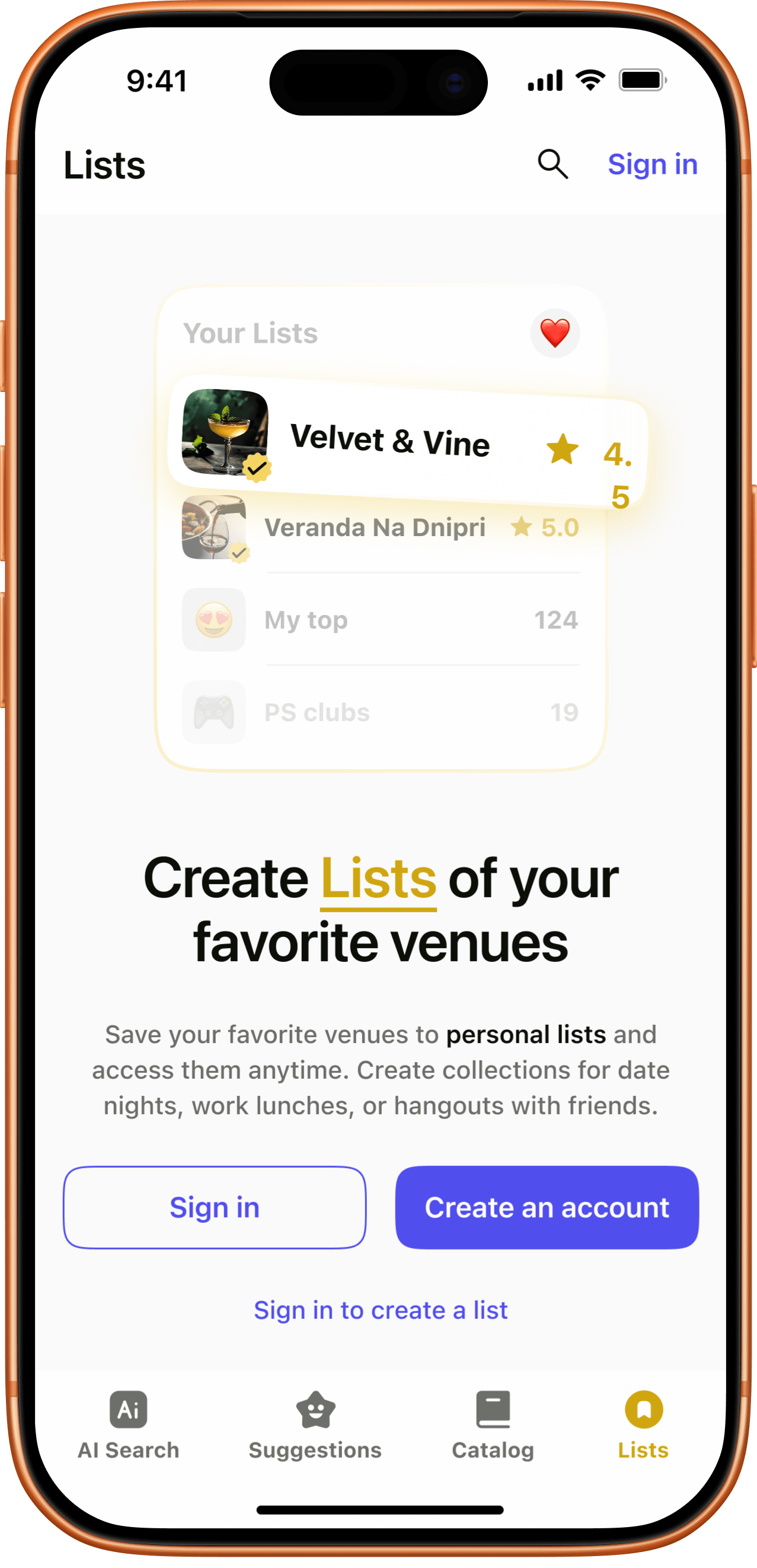
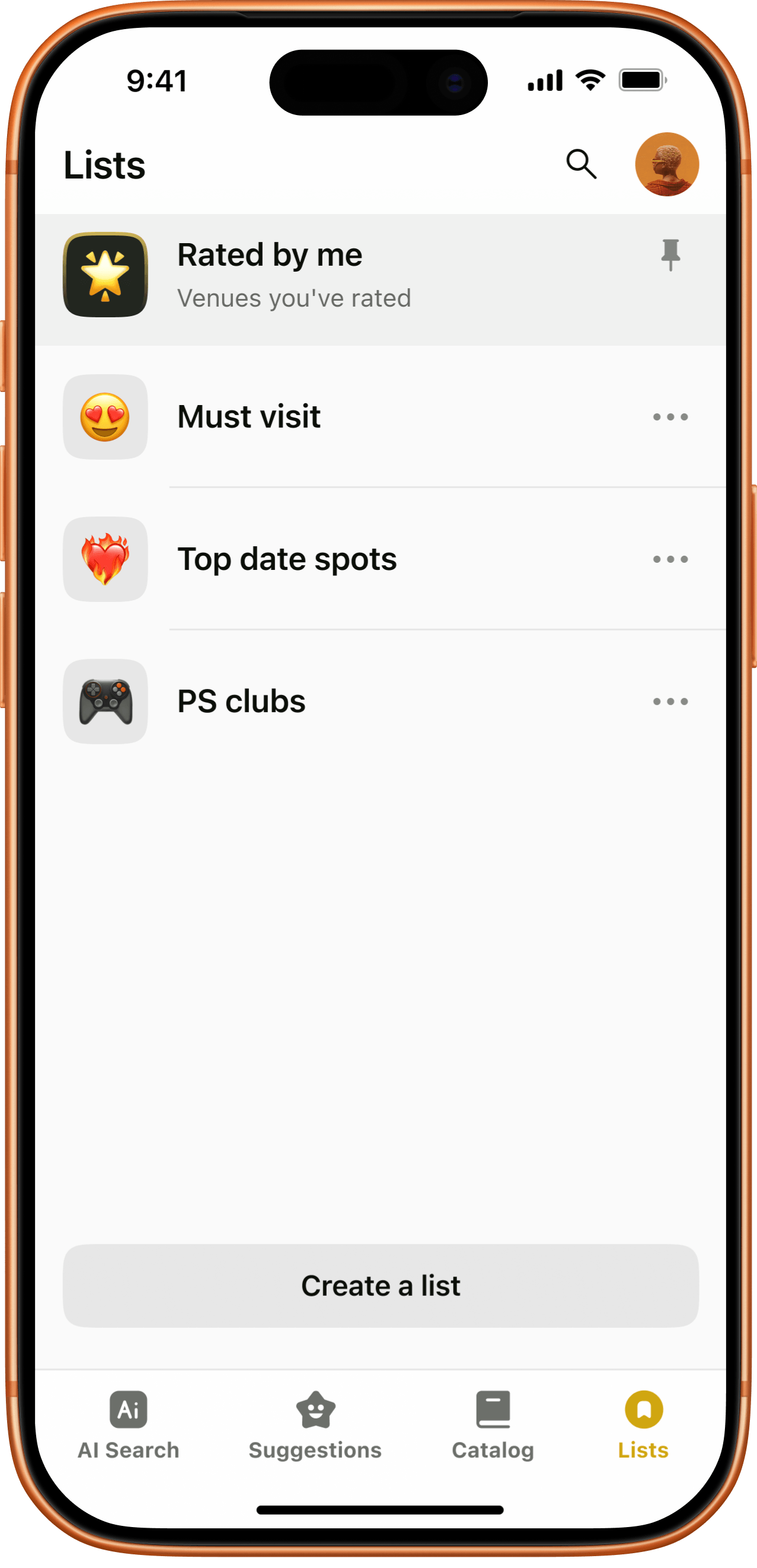
In user interviews, people kept saying the same thing: they save places in notes, messengers, and Google Maps, and it all gets mixed together.
Lists let them create a collection for each occasion, with a custom name and emoji.
Outcome
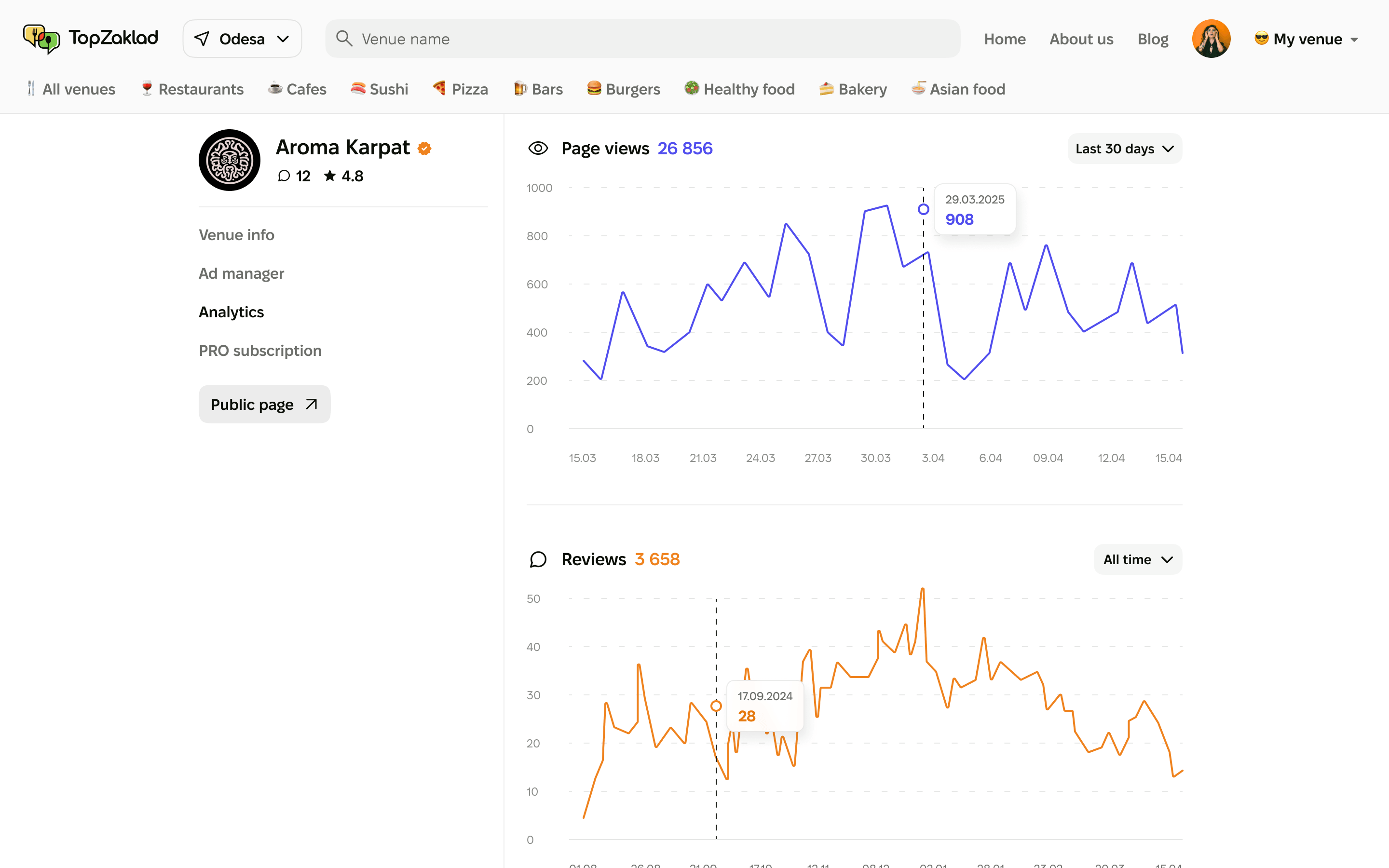
- Web platform: public catalog + dashboard for venue owners (profile, advertising, analytics).
- Mobile app: full design across all flows, ready for development.
- Both phases, web and mobile, designed in ~100 hours alongside full-time work.
Next steps
- See how people actually use AI search: what they type in their first prompt, whether they know what to write without guidance, and how many tries it takes to get a result they're happy with.
- Compare AI search with the catalog: which one more people choose, and which leads to better outcomes like saving a venue or coming back the next day.
- Check whether AI-matched venues get better reviews than filter-picked ones. That shows how well the AI performs and gives real data to improve it.